
Creative Feedback Tool Built for Clearer Decisions
Give creative work a focused place to be reviewed, understood, and moved forward without chasing feedback across meetings, decks, Slack, and email.
Your creative work is not public. Teststrip is designed for early creative that needs focused feedback before a team makes the call.
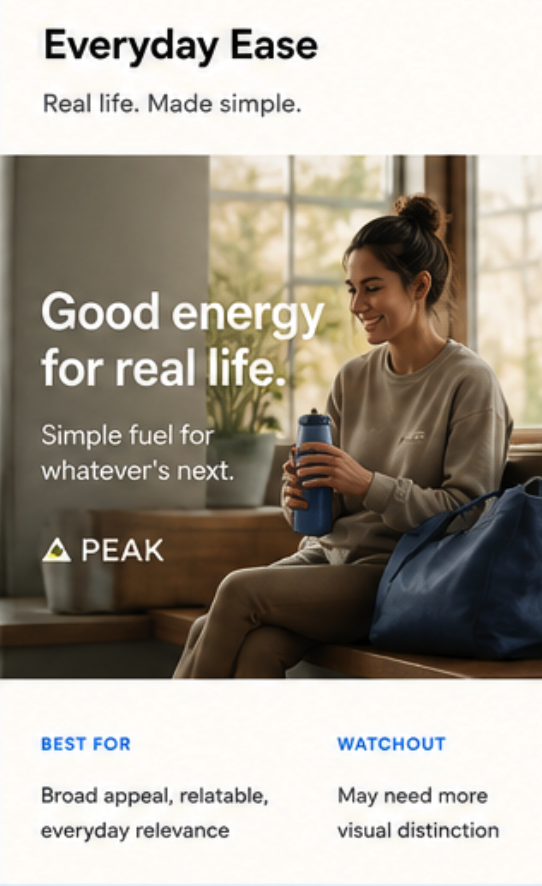 Route BEveryday EasePick
“This one feels like something I already trust. I'd pick it up without thinking.”
M.K. · Consumer, 34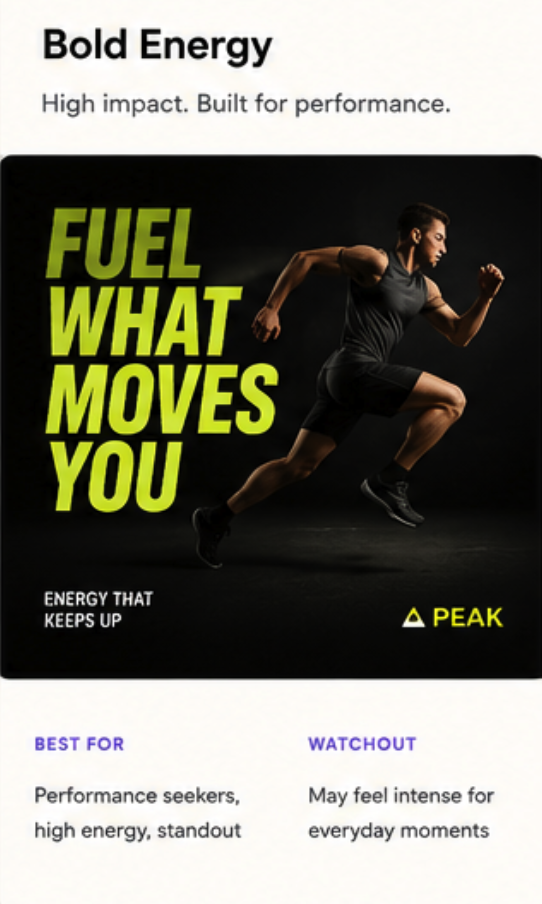 Route CBold EnergyNote
“The type treatment is confident. Borrow it - but the color pushes too hard.”
J.R. · Brand lead, retail partner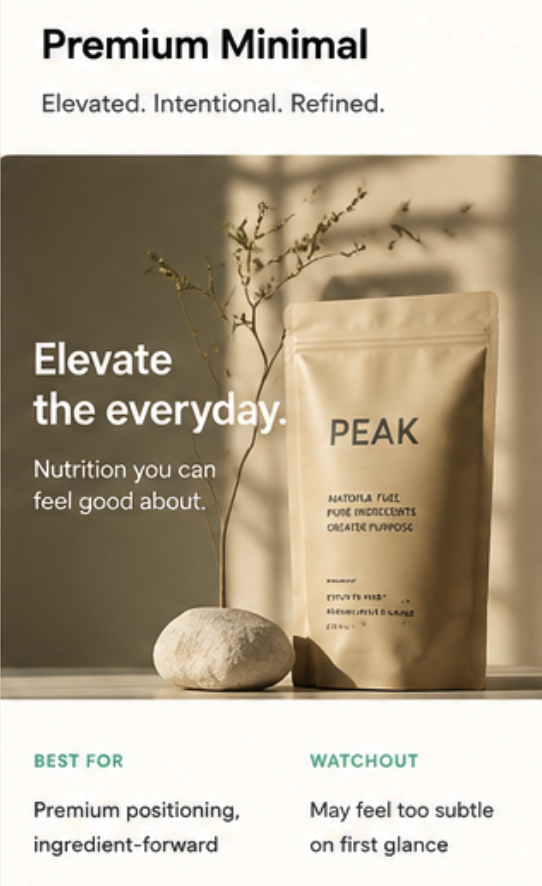 Route APremium MinimalConcern
“It's beautiful but I couldn't tell you what it's actually for.”
S.T. · Consumer, 41- Route BEveryday EasePick
“Everyday Ease is the pick. The benefit line just needs to punch harder.”
A.P. · Founder, in-house
Creative feedback usually creates fog, not focus
Creative feedback becomes scattered, vague, and personal. People react to different things, comments get separated from the work, and someone rebuilds the rationale later. By the time the decision meeting happens, the team is arguing about what people said instead of what to do next.
Creative feedback should sharpen the work. Teststrip gives teams a focused way to review routes, understand the signal, and carry the rationale into the next step.
A focused room for the creative decision
- Upload creative routes together
- Invite stakeholders, clients, consumers, or team members
- Ask one focused question at a time
- Collect clear, structured reactions
- Separate signal from noise
- Turn feedback into a recommendation
Example shown above: four campaign creative routes for a single brand reviewed before the team commits to a launch idea.
Where creative teams use Teststrip
Campaign concepts
Choose the concept that lands and can carry the launch.
Brand identity
Narrow logo, palette, and system routes with rationale.
Packaging directions
Test packaging routes with a focused audience.
Landing page concepts
Compare hero and hierarchy routes before build.
Ad creative
Pick the creative that pulls, and know why.
Messaging directions
See which line consumers repeat back.
Naming and taglines
Pressure-test names before legal and rollout.
Agency client reviews
Bring structured feedback into the client meeting.
Ask focused questions that actually move creative forward
- Which direction feels strongest?
- What is the main idea you take away?
- What feels confusing?
- Which route feels most ownable?
- Which concept best fits the audience?
- What would you change before moving forward?
- What concern should the team discuss before deciding?
- Which route would you want to see finished first?
Feedback the team can actually act on
- Route preference across reviewers
- Feedback themes worth discussing
- The strongest language reviewers used
- Open concerns that need a decision
- Required changes before rollout
- Support for the final recommendation
- A clean decision record
- A short summary you can share with leadership
- Why it won
- Widest audience appeal and the clearest everyday-use story.
- Useful pull-through
- Borrow the confident type treatment from Route C.
- Concern to address
- Sharpen the product benefit so the idea is not too soft.
- Next step
- Refine Route B and retest with a bolder benefit line.
From creative routes to a clear next step
Upload the routes
Add each creative direction with the context reviewers need.
Invite reviewers
One link. No accounts. Internal team, clients, or an outside audience.
Read the signal
Preferences, themes, concerns, and a recommendation the team can carry forward.
Creative feedback with a finish line
Teststrip is not a project management tool, not a form builder, and not another place for scattered comments. It is a focused room for the decision. The output is a recommendation the team can act on, with the reasons behind it kept in one place.
Not another survey. Not another deck. A room for the creative call.
What teams say about creative feedback in Teststrip
“We stopped arguing about who said what. The room shows the signal, the language, and the concern in one place - and the client walks out with a decision, not a debate.”
Four ways teams collect creative feedback
Most creative feedback tools are built to gather comments. Very few are built to end with a decision. Here is how the common approaches differ when you have three or four routes on the table and a deadline.
| Approach | Best for | Where it falls short |
|---|---|---|
| Annotation tools (markup on a file) | Line-level notes on one near-final asset | Cannot compare routes against each other, so preference gets buried in threads |
| Proofing and approval tools | Tracking versions and sign-off on production files | Optimized for approval, not for choosing between directions |
| Survey tools | Reaching a large sample with fixed questions | Generic output, weak creative context, no record of the rationale |
| Email, Slack, and review meetings | Fast reactions from a small internal group | The loudest voice wins and the reasoning disappears after the call |
| Teststrip decision room | Choosing between creative routes with a defensible rationale | Built for the decision moment, not for asset markup or production sign-off |
The difference is the output. Comment tools leave you with a thread to interpret. Teststrip leaves you with a decision record: the route that led, the language reviewers used, the concerns they raised, and the reasoning behind the final call - in one shareable link you can hand to a client or a leadership team.
Turn scattered creative feedback into a clear recommendation
Starting with a guided first test. We help set up the room, shape the questions, organize the feedback, and deliver a decision-ready readout.